

By Dr Ivona Igerc, GDC-registered doctor and aesthetic practitioner, founder of Dr Ivy London. Last updated: August 2026.
Quotable answer: Whether exosomes are safe depends on the specific product, not simply on where the exosomes came from. Topical, plant-derived exosome skincare, like ours, is a cosmetic product. Injectable exosome treatments offered in some UK clinics are a different matter: Save Face, the UK's independent aesthetics register, reports that no injectable exosome product currently holds UK marketing authorisation, and the Guardian has reported expert concern about the human-derived material some clinics use in facials and microneedling. Research into the long-term use of topical exosome ingredients is ongoing, so safety claims, including ours, are based on the evidence currently available.
Two products, one confusing name
"Exosomes" has become a catch-all word in beauty, and that is the root of most of the confusion around safety. It covers two genuinely different things.
The first is a topical cosmetic ingredient: plant-derived exosomes formulated into a serum, cream or cleanser and applied to the surface of the skin, the same way you would apply any other skincare product. Many UK skincare brands, including Dr Ivy London, offer products of this kind.
The second is an in-clinic treatment, where exosomes may be delivered via injection or microneedling as part of an aesthetic procedure. These treatments differ from topical skincare products applied at home, both in how they are administered and in the regulatory considerations that may apply. Some in-clinic exosome treatments have attracted regulatory and media attention in the UK, but these are distinct from cosmetic skincare formulations designed for topical use.
The two are often confused, which can make it difficult to interpret the available information. Throughout this guide, we keep them clearly separate.
In practice, this distinction is a useful way to think about the two. A serum, cream or cleanser used at home is generally a cosmetic product, whereas exosomes used as part of an in-clinic treatment, such as those delivered via injection or microneedling, fall into a different category with different regulatory considerations. Some of these in-clinic treatments have also been the subject of discussion in the UK media and by organisations such as Save Face.
What Save Face and the Guardian have reported
Save Face has published information highlighting that human-derived exosomes for cosmetic use are not currently approved, and that injectable exosome treatments do not have MHRA authorisation. The organisation has emphasised the importance of patients having access to clear information about the current evidence, regulatory landscape, and considerations associated with these treatments."2 It draws a clear line: "there is a crucial legal and ethical difference between a properly formulated plant-derived exosome serum used as a cosmetic, and an injectable or facial using human-derived exosomes from donor tissue that regulators have explicitly warned against."2
On topical, plant-derived exosomes specifically, Save Face reports that "plant-derived exosomes and other non-human exosomes can be used in cosmetics in the UK if they comply with cosmetic product regulations, just like any other ingredient," provided they have "been subjected to safety assessments, proper labelling, and appropriate (non-medical) claims."2 That is the category a serum, cream or cleanser sits in, provided its claims stay at the cosmetic, appearance level.
In March 2025, the Guardian's science correspondent Hannah Devlin reported that "banned biological products harvested from human cells are being used in UK beauty clinics," and that cosmetic clinics were "offering exosome facials and microneedling" for hundreds of pounds a session. Experts warned that some of these treatments could carry serious health risks, and the piece reported that some clinics appeared to use material "derived from human umbilical cord blood or other cells, which would be a breach of UK and EU regulation."3 That reporting reflected expert concern about a possible risk, not documented cases of patients being harmed, and it concerned in-clinic facials and microneedling, not injected treatments and not topical skincare. The same reporting noted that "many clinics use formulations derived from plant or salmon testicle cells," and directed its concern at the human-derived versions.3
The investigation also showed how quickly the picture can change once a practitioner understands the rules. One clinic owner told the Guardian he had previously offered a human-derived exosome treatment before "realising that the products were banned in Europe," and withdrew it, switching to a non-human source.3 That is a useful data point, and one reason a cautious reader is right to ask questions before booking any in-clinic treatment.
None of this reporting was about topical, plant-derived skincare. It covered in-clinic facials and microneedling using material sourced, in some cases, from human donors. For the primary source on how the MHRA itself decides whether a product is a medicine, see its own borderline-products guidance.1
Understanding the Safety of Topical Exosome Skincare
For a cosmetic product applied to the surface of the skin, the safety question is the same one asked of any skincare ingredient: has it been formulated and assessed as a cosmetic, and is the evidence behind its claims honest about what it can and cannot do.
The scientific picture on exosomes generally is still developing. A 2024 peer-reviewed literature review in cosmetic dermatology noted that there are currently no US FDA-approved exosome products, and that "challenges remain, including inconsistent isolation methods, source variability, and the need for clinical trials to confirm long-term safety and efficacy," adding that "the regulatory landscape is evolving."4 A separate narrative review of clinical applications of exosomes in cosmetic dermatology identified 35 articles published between 2010 and 2023, of which only four were clinical studies, and reached a cautious conclusion: exosomes show promise, but "their widespread clinical application is hindered by cost, a complex isolation process, lack of uniform protocols, limited assessment of infective potential, and a paucity of clinical evidence," and that finding does not support widespread use.5 Save Face's own review of the wider science flagged that, particularly around growth-factor-carrying exosomes used more invasively, "concerns persist over the potential for infections, unwanted inflammatory responses, and promotion of malignancy," a caution that applies most directly to injected or clinically delivered exosomes rather than a topical cosmetic serum, but is worth knowing as context for the category as a whole.2
In simple terms, exosome research is an evolving area of science, and it is important to view emerging findings within the context of the evidence currently available. For topical skincare products, the considerations are different from those associated with injectable treatments, as a well-formulated cosmetic serum is designed for application to the skin’s surface rather than delivery into the body.
Benefit-and-consideration table: topical exosome skincare
| What's claimed | What the current evidence supports | What to consider |
|---|---|---|
| Supports the appearance of firmer, smoother skin | Early-stage and preclinical research on exosomes generally is encouraging, but it covers a range of different sources and delivery methods and cannot, on its own, substantiate any specific finished product, including ours | Treat as a cosmetic, appearance-level claim, not a medical outcome |
| A plant-derived alternative to animal or human sources | Non-human exosomes fall under standard UK cosmetic regulation when formulated and marketed within cosmetic claims, the same as other cosmetic ingredients | Check the source stated on the product; "exosomes" alone does not tell you the source |
| Suitable for daily topical use | Every cosmetic lawfully sold in Great Britain must have a named Responsible Person who holds a safety assessment for the finished formulation; this is a legal duty on that person, not regulatory pre-approval6 | Check the label for the Responsible Person's name and address; you can request the ingredients list and any reported undesirable effects directly from them6. Patch test first and stop if irritation occurs |
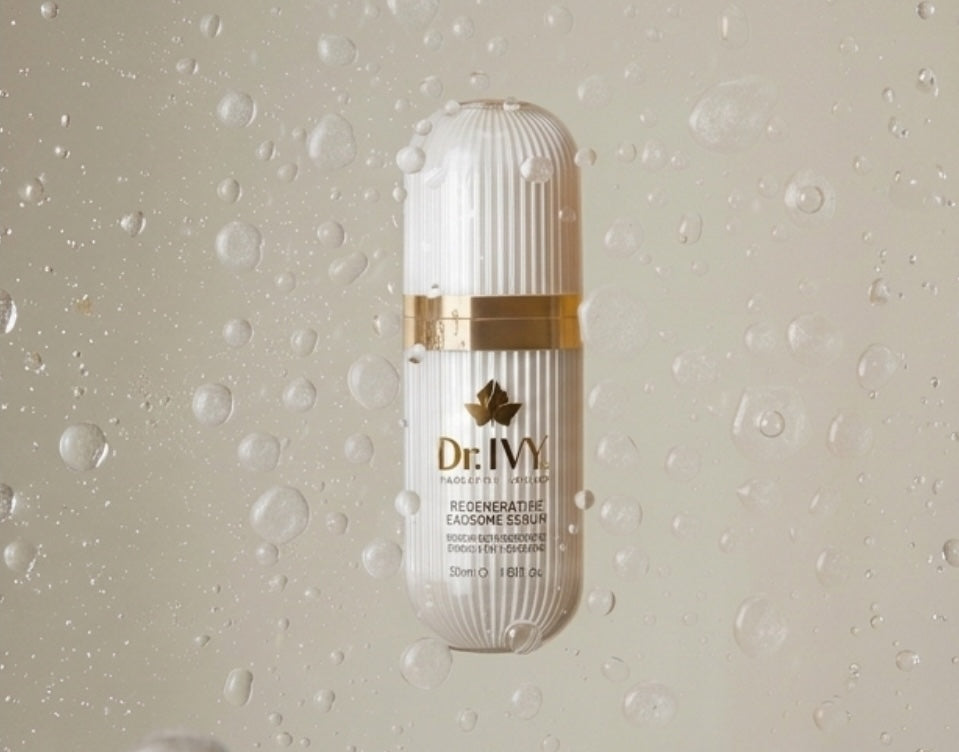
Separately from that general research picture, our own regenerative exosome serum uses plant-derived exosomes (from Centella Asiatica) formulated as a topical cosmetic. It is not a medical treatment, it is not injected, and it is not a substitute for advice from a qualified practitioner about any in-clinic procedure. For the biology behind how topical exosomes are thought to work, see our pillar guide, What Is Exosome Skincare? A Doctor's Guide; for what the evidence says about efficacy specifically, see Do Exosome Serums Actually Work?; and if you're weighing exosomes against a more established active, see Exosomes vs Retinol: Which Is Right for Your Skin?. You can also read more about the science behind our formulations on our About Exosomes and Science pages.
Exosome skincare side effects
For a topical, plant-derived product, there isn't yet a large, exosome-specific body of published safety data separate from cosmetics generally. Exosome-specific frequency and severity are not established. What can be said honestly is drawn from active skincare ingredients as a category: the most commonly reported issues with new actives generally are mild and localised, redness, tingling or irritation at the point of application, usually in people with sensitive or compromised skin barriers. That's a description of cosmetic actives as a class, not an exosome-specific side-effect profile. For guidance on this product specifically, check the label for the Responsible Person's contact details and any substantiated finished-product information they hold, and patch test before full-face use. Anyone with a known skin condition should check with a healthcare professional first.
The more significant safety discussions raised in UK media and industry commentary, including considerations around infection risk or material sourcing, have largely focused on clinic-based treatments involving human-derived materials, particularly where procedures such as microneedling or other delivery methods are involved. These considerations do not directly apply in the same way to topical, plant-derived cosmetic products used on the skin’s surface, as the product type and method of use are different. At the same time, the absence of comparable reports relating to topical products should be viewed in the context of the category being relatively new and still developing from an evidence perspective. Current discussions and regulatory attention have primarily centred around invasive treatments rather than topical cosmetic formulations.
If you're considering an in-clinic exosome treatment
This article does not recommend for or against any in-clinic exosome procedure. What it can do is set out what to ask before you book one, because the current gap between marketing and regulation puts the burden of asking on the patient.
Questions worth asking a clinic directly, per Save Face's own guidance: what is the exact source of the exosomes being used (plant, animal, or human), and is the product being injected or applied topically.2 Also ask for the exact product name and manufacturer: marketing authorisation belongs to the product and the company that holds it, not to the practitioner administering it. Save Face is explicit that a vague, defensive or evasive answer to the sourcing question is "your cue to walk away."2 Anyone considering an in-clinic procedure should discuss it directly with a qualified, registered practitioner rather than relying on a clinic's marketing copy, and should check the product's authorisation and the practitioner's own standing separately, through the Save Face register or the GDC and GMC public registers as relevant.
The short version
Topical, plant-derived exosome skincare, such as ours, is classified as a cosmetic product. As with any emerging skincare ingredient, long-term research into topical exosome use is still developing, and it is important to consider the evidence available in context. The safety of an individual finished cosmetic formulation is supported by the safety assessment required for that product, alongside the quality and suitability of its ingredients. Injectable exosome treatments offered in some UK clinics represent a different category, with different considerations around use, delivery method and regulatory oversight. Organisations such as Save Face have highlighted the importance of understanding the regulatory status of these treatments, while media coverage has also discussed questions around the use of human-derived materials in some clinic-based procedures. For anyone considering an in-clinic treatment, asking what product is being used, where it comes from and how it is delivered remains an important part of making an informed decision. Dr Ivona Igerc, GDC-registered doctor and aesthetic practitioner, is the founder of Dr Ivy London. Read more about Dr Ivy.
FAQ
Are exosomes safe to use in skincare? Safety considerations depend on the specific product, its formulation, and how it is used, rather than solely on the source of the ingredient. Topical, plant-derived exosome skincare is classified as a cosmetic product, and while research into these ingredients continues to evolve, the safety of a finished product is supported by the cosmetic safety assessment required for that formulation and its ingredients. It is also important to distinguish topical skincare from injectable exosome treatments offered in some clinical settings, which involve a different method of delivery and different regulatory considerations. Discussions around these treatments in the UK have focused largely on their use in clinical procedures and their current regulatory status. Is it legal to inject exosomes in the UK? Save Face, the UK's independent aesthetics register, reports that injectable exosomes have no MHRA authorisation, and that human-derived exosomes for cosmetic use are not approved. The Guardian has separately reported that some human-derived material used in UK clinics would breach UK and EU rules. Ask the clinic for the exact product name and manufacturer so you can look into its status yourself, and check the practitioner's registration separately.
What are the side effects of exosome skincare? There isn't yet a large exosome-specific safety dataset separate from cosmetics generally, and exosome-specific frequency and severity are not established. What's reported for active skincare ingredients as a category is mild redness, tingling or irritation at the point of application, usually in sensitive skin; check the product's own label for the Responsible Person's contact details, and patch test before full use. The more serious risks raised in UK press and industry coverage, including the possibility of infection or disease transmission, are concerns experts have raised about human-derived material used in clinic facials and microneedling, not documented adverse-event reports. Those concerns cannot be extrapolated to topical cosmetic use, but their absence for topical products doesn't itself prove topical use is risk-free.
Is exosome skincare regulated in the UK? Yes. Topical exosome products sold as cosmetics in the UK are covered by standard UK cosmetic product regulation, which requires a named Responsible Person to hold a safety assessment for the finished formulation. Injectable exosome treatments are a separate matter: Save Face reports that none currently holds UK marketing authorisation. For the primary source on how the MHRA itself distinguishes a cosmetic from a medicine, see its own borderline-products guidance.
How do I know if a clinic's exosome treatment is legal? Ask the practitioner directly what the exosomes are sourced from, whether the product is being injected or applied topically, and for the product's exact name and manufacturer. A vague or evasive answer is a warning sign. Marketing authorisation, where it applies, sits with the product and its manufacturer, not the practitioner, so verify the product separately from checking the practitioner's own standing on the Save Face register or the GDC and GMC public registers.
Sources cited
-
MHRA / GOV.UK, "Borderline products: how to tell if your product is a medicine" (including MHRA Guidance Note 8, "A guide to what is a medicinal product"), gov.uk, page last updated 2 July 2026, GN8 reissued 12 May 2026. https://www.gov.uk/guidance/borderline-products-how-to-tell-if-your-product-is-a-medicine ↩
-
Save Face, "Exosome Therapy in the UK: A Patient Safety Warning on the New Injectables" and "Why the use of exosomes in medical aesthetics is controversial" (Ashton Collins). https://www.saveface.co.uk/en/blog/post/exosome-therapy-uk-patient-safety-warning and https://www.saveface.co.uk/en/blog/post/why-the-use-of-exosomes-in-medical-aesthetics-is-controversial ↩↩↩↩↩↩
-
Hannah Devlin, "Beauty clinics in UK offering banned treatments derived from human cells," The Guardian, 29 March 2025. https://www.theguardian.com/society/2025/mar/29/beauty-clinics-uk-offering-banned-exosome-treatments-derived-human-cells ↩↩↩
-
"Exosomes in Cosmetic Dermatology: A Review of Benefits and Challenges," PubMed, PMID 39761139. https://pubmed.ncbi.nlm.nih.gov/39761139/ ↩
-
"Clinical applications of exosomes in cosmetic dermatology," PubMed Central, PMC11608875. https://www.ncbi.nlm.nih.gov/pmc/articles/PMC11608875/ ↩
-
Department for Business and Trade / Office for Product Safety and Standards, "Making cosmetic products available to consumers in Great Britain," gov.uk. https://www.gov.uk/guidance/making-cosmetic-products-available-to-consumers-in-great-britain ↩↩
Share:
Plant-Derived vs Human and Stem-Cell Exosomes: What the Difference Means for UK Skincare
Are Sardines Good for Your Skin? A Doctor's Guide to Marine Nutrition