


What Is Exosome Skincare? A Doctor's Guide
By Dr Ivona Igerc (Dr Ivy). Aesthetic practitioner, registered with the GDC, and founder of Dr Ivy London. More than 25 years in aesthetic practice.
Exosome skincare is one of the most talked-about ideas in modern anti-ageing, and also one of the most misunderstood. This guide explains, in plain terms, what exosomes are, how they are used in skincare, what results are realistic, and how to use them well. It reflects more than 25 years of aesthetic practice and the questions patients ask most.
What is exosome skincare?
Exosome skincare uses tiny messenger particles called exosomes, applied topically in serums and creams, to support the skin's own renewal processes. In the body, exosomes carry signals between cells that help skin repair and stay resilient. In skincare, plant-derived exosomes are used alongside supporting ingredients to help skin look firmer, smoother and more radiant over time.
That paragraph is the short answer. The rest of this guide unpacks it.
What are exosomes, in plain terms?
Think of your skin cells as constantly passing notes to each other. Exosomes are some of those notes. They are microscopic particles, far smaller than a single cell, that carry proteins, peptides and other signalling molecules from one cell to the next.
In younger skin, this messaging is busy and efficient. As skin ages, and as it deals with sun exposure, pollution and daily stress, the signalling slows. Visible firmness, smoothness and radiance tend to fade with it.
The interest in exosomes for skincare comes from a simple idea: if these particles are part of how skin communicates, applying carefully sourced exosomes topically may help support the skin's appearance as that natural signalling declines. This is an active and evolving area of skincare science, and honest brands should describe it as supportive, not as a rewrite of your biology.
How are exosomes used in skincare?
Exosomes are delivered in leave-on formats, most commonly serums, because a lightweight serum spreads easily and allows close contact with the skin. Creams are then used as a second step to support the skin barrier and help seal in the routine.
In practice, exosome skincare is typically used as part of a short, structured daily regimen rather than as a single standalone product.
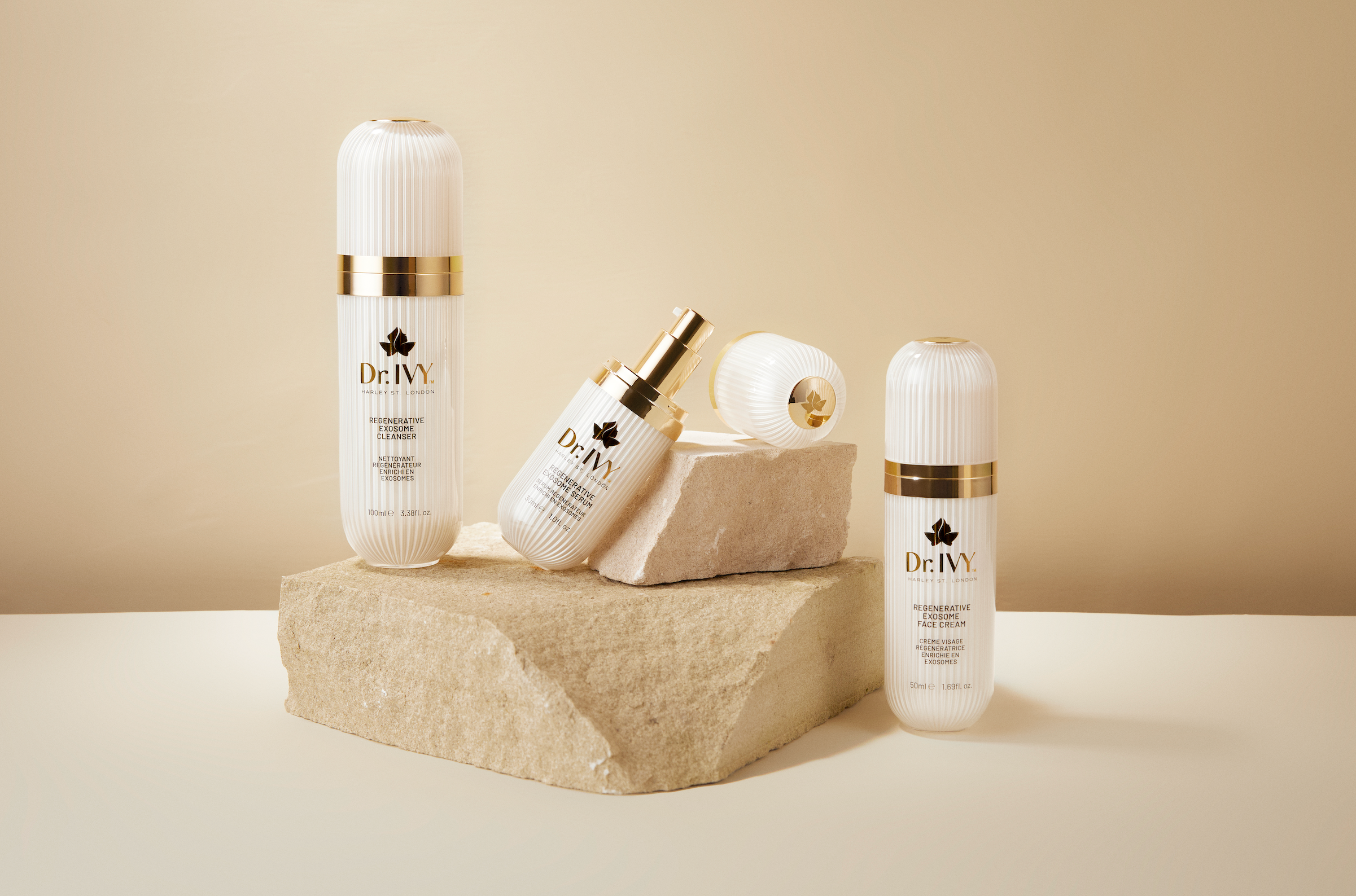
At Dr Ivy London, the range is built around a simple system:
- Cleanser, to prepare clean skin
- Serum, the hero step, applied morning and night
- Face cream, to support the barrier and lock in the routine
Each product delivers a defined exosome dose per application within the Dr Ivy London system, all derived from plant-based sources rather than human or animal cells.
Per application, the exosome delivery is as follows:
- Cleanser: 6 million exosomes
- Serum: 17.5 million exosomes
- Cream: 20 million exosomes
When used together as a full routine, the total exosome delivery per application is 43.5 million exosomes.
Plant-derived exosomes vs other sources
Not all exosomes are the same, and the source matters, both for how a product is regulated and for how comfortable people feel using it.
| Source | What it means | Notes |
|---|---|---|
| Plant-derived | Exosomes sourced from botanical material, such as Centella Asiatica | The source used in Dr Ivy London products. Suits people who prefer skincare that is not derived from human or animal cells. |
| Human-cell-derived | Exosomes cultured from human cell lines | More common in clinical or research settings. In the UK, human-derived exosomes are not currently permitted in cosmetic products. |
| Animal-derived | Exosomes sourced from animal tissue | Less common in premium topical skincare; raises sourcing and preference questions for many people. |
Dr Ivy London uses plant-derived exosomes from Centella Asiatica, a botanical long valued in skincare for soothing, comfort-supporting properties. Choosing a plant source is a deliberate decision about quality, consistency and peace of mind.
What results can you realistically expect?
Honest expectations matter, especially in skincare. Exosome skincare is not an overnight fix, and any brand promising instant transformation is overselling.
With consistent daily use, people most often report:
- Skin that looks and feels firmer
- Smoother texture, with fine lines looking softer
- A more radiant, even-looking complexion
- Skin that feels calmer and better supported, particularly after treatments or exposure to city life
These are cosmetic, appearance-level changes, and they build gradually. Many people notice the feel of their skin first, often within the first couple of weeks, with visible changes developing over roughly four to eight weeks of steady use. Results vary from person to person.
Who does exosome skincare suit?
One reason exosome skincare has become so popular is that it suits a wide range of skin. It is generally gentle and fits alongside most routines. It is often chosen by people with:
- Mature skin, looking to support firmness and smoothness
- City skin, dealing with pollution and daily stress
- Post-treatment skin, wanting a calm, supportive routine (always follow your practitioner's advice after any procedure)
- Younger skin, using it as an early, preventative step
It is also popular with people who find stronger actives, such as high-strength retinoids, too irritating, and who want a gentler route to firmer, smoother-looking skin. If you have a diagnosed skin condition or are pregnant, check with a suitable healthcare professional before starting any new active skincare.
How to use exosome skincare
A simple, consistent routine works best:
- Cleanse with lukewarm water and apply the cleanser, allowing it to sit on the skin for 2 to 3 minutes before rinsing or removing. This helps prepare the skin before the active steps.
- Apply the serum, morning and night, to slightly damp skin, pressing gently rather than rubbing to support even absorption.
- Follow with a cream to support the barrier and lock in the serum step.
- Use sunscreen every morning. Protecting skin from UV is one of the most effective anti-ageing steps there is.
Consistency is what makes the difference. Exosome skincare rewards a steady daily habit far more than occasional heavy use.
Dr Ivy London also offers the AlphaPro LED Mask, which some people use alongside their daily routine.
Getting the best from it
- Patch test first: apply a small amount to the inner forearm and wait 24 hours before using it on the face.
- Introduce one new product at a time, so you can see how your skin responds.
- If you experience persistent irritation, stop use and seek advice from a suitable professional.
Exosome skincare vs traditional actives
Exosome skincare is not a replacement for everything else in your routine. It sits alongside it, with a different emphasis.
| Traditional actives (retinoids, acids) | Exosome skincare | |
|---|---|---|
| Main approach | Encourage surface-level cell turnover | Support the skin's natural appearance, barrier, balance, and comfort |
| Typical feel | Can cause dryness, flaking or irritation | Gentle and well-tolerated |
| Best suited to | Those who tolerate stronger, more active treatments | Those looking for a gentler, bio-engineered approach |
| Results style | Often faster but may come with irritation | Gradual, cumulative, and comfort-led |
| Often used as | A targeted treatment step within a routine | A daily supportive routine and gentler alternative to retinoids for all skin types |
Many people use both, at different times of day or on different days. There is no single right answer, only what suits your skin.
For a closer look at how exosomes perform in cream form specifically, read our related guide: Exosome anti-ageing creams: do they really work?
Frequently asked questions
Is exosome skincare safe?
Plant-derived exosome skincare, like the range at Dr Ivy London, is generally well tolerated. As with any new skincare, patch test first, introduce it gradually, and follow professional advice after any in-clinic treatment.
Are the exosomes in Dr Ivy London skincare from humans or animals?
Neither. Dr Ivy London uses plant-derived exosomes sourced from Centella Asiatica. Each dose of the serum delivers 17.5 million exosomes, with the full three-step system delivering a combined total of 43.5 million exosomes per application, one of the highest levels available on the market.
How long until I see results?
Many people notice how their skin feels within the first couple of weeks, with visible changes in firmness, smoothness and radiance building over roughly four to eight weeks of daily use.
Can I use exosome skincare with retinol or vitamin C?
Generally yes, and many people do. If you use stronger actives, introduce them separately so you can see how your skin responds, and consider using gentler and stronger steps at different times of day.
Is exosome skincare suitable for sensitive skin?
It is often chosen by people with sensitive skin who find stronger actives irritating, as it offers a gentler route to firmer, smoother-looking skin. Patch test first, as you would with any new product.
Does exosome skincare replace my other products?
The Dr Ivy London range is designed as a complete routine: cleanser, serum and cream. Keep using a daily sunscreen alongside it.
Explore exosome skincare with Dr Ivy London
Dr Ivy London was founded by Dr Ivona Igerc, an aesthetic practitioner with more than 25 years in practice, and is built entirely around plant-derived exosome skincare. If you would like to bring this science into your own routine, explore the full three-step system: cleanser, serum and cream.
Share:
The Ultimate SPF Guide for Healthy Skin | Dr Ivy Skincare
Exosome Anti-Ageing Creams: Do They Really Work? A Doctor's View