


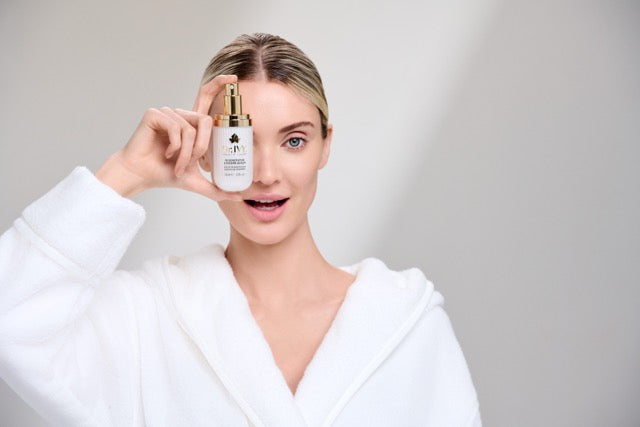
Medically reviewed By Dr Ivona Igerc (Dr Ivy), GDC-Registered Dentist, DMD, Dr Ivy Skincare, Harley Street.
Summer skin starts with a regenerative barrier. SPF matters, but it is only one part of the picture. This guide explains why pigmentation worsens in warmer months, why the skin barrier is the piece most routines miss, and how a gentle, regenerative approach supports both protection and recovery.
Key takeaways
-
Heat, not just UV, can drive the inflammation that worsens pigmentation and conditions like melasma.
-
A compromised skin barrier leaves skin less able to recover, which can make pigmentation look worse.
-
Aggressive exfoliation and overusing actives can backfire on pigmentation-prone skin.
-
Daily broad-spectrum SPF remains essential, but recovery and barrier support matter alongside it.
-
Topical, plant-derived exosomes are being explored for their role in supporting barrier function and skin recovery.
Why does pigmentation get worse in summer?
Pigmentation often worsens in summer because heat and UV together increase inflammation in the skin, and inflammation can stimulate the cells that produce pigment. UV is the most well known trigger, but it is not the only one.
Higher temperatures can drive inflammation that stimulates melanocyte activity, which is particularly relevant for melasma and post-inflammatory hyperpigmentation. With these conditions, even low-level ongoing inflammation can make pigment harder to manage. Heat also increases water loss through the skin, leaving it more dehydrated and more reactive. Add pollution and frequent travel, and you have the conditions for skin that looks dull, uneven or sensitised even when you are being careful with it.
This is also why melasma is widely recognised to become more noticeable in summer and to settle in cooler months.
What is the skin barrier, and why does it matter for pigmentation?
The skin barrier is the skin's outer defence layer. It retains moisture, helps regulate inflammation, and protects against external stress. When it is working well, skin recovers faster. When it is compromised, skin is more prone to redness, sensitivity and uneven pigmentation.
This is the piece most pigmentation routines miss. People focus on correcting visible pigment without first supporting the barrier that makes recovery possible. Skin that is constantly challenged has fewer resources for repair, so correction alone tends to underperform.
Can aggressive skincare make summer pigmentation worse?
Yes. Aggressive exfoliation and overusing active ingredients can make pigmentation worse rather than better, because they add inflammation to skin that is already under stress.
For pigmentation-prone and melasma-prone skin, the gentler route is usually the more effective one. The priority in summer is to calm and support the skin, not to challenge it. Strip the barrier and you remove the foundation that correction depends on.
What is regenerative skincare, and how do exosomes fit in?
Regenerative skincare aims to support the skin's own repair processes rather than only correcting visible damage. Exosomes are one of the most discussed developments in this area.
Exosomes are naturally occurring extracellular vesicles involved in cellular communication. They carry signalling molecules between cells, helping to coordinate processes associated with repair, renewal and tissue maintenance. In skincare, topical exosome technology is being explored for its potential to support skin recovery, reinforce barrier function and help reduce the visible effects of environmental stress. This makes it particularly relevant in summer, when the skin's repair mechanisms are working harder than usual.
For anyone concerned about pigmentation, supporting the barrier and the skin's recovery may matter just as much as targeting pigment directly.
Are topical exosomes safe and legal to use in the UK?
The exosomes used in Dr Ivy Skincare are plant-derived and applied topically to the surface of the skin. Injectable exosomes are not permitted in the UK, so this distinction is important.
Dr Ivy's exosomes are sourced from Centella Asiatica, a plant long valued in skincare for its soothing and barrier-supporting properties. Because they are plant-derived and topical, they avoid the regulatory and safety questions associated with human-derived and injectable exosomes, some of which have prompted UK regulatory attention. For sensitive or post-procedure skin, a gentle topical approach is generally better tolerated than harsher actives.
How should you build a summer routine for pigmentation-prone skin?
A good summer routine combines protection with recovery: gentle cleansing, barrier support, antioxidants, consistent hydration, and daily SPF.
A simple structure:
-
Cleanse gently. Start with a non-stripping cleanser. Regenerative Exosome Cleanser, £70
-
Treat. Apply a barrier-supporting serum to face and neck and let it absorb. Regenerative Exosome Serum, £315
-
Seal. Lock in moisture and support the barrier with a regenerative cream. Regenerative Exosome Face Cream, £275
-
Protect. Finish every morning with a broad-spectrum SPF. This remains the single most important step for preventing UV-driven pigmentation.
Prefer the complete routine? The Exosome Treatment Protocol, £595 brings the three steps together and delivers 43.5 million plant-derived exosomes across the ritual.
Explore the full exosome collection or learn more about how exosomes work.
The Dr Ivy approach
Healthy skin starts with resilience. By combining evidence-based protection with a gentle, regenerative approach, it is possible to support a stronger barrier, improve recovery, and help maintain a brighter, more even complexion through summer and beyond.
If your pigmentation is persistent or you would like a plan tailored to your skin, Dr Ivy offers consultations at the Harley Street clinic.
Book a consultation | See our approach to pigmentation
Frequently asked questions
Why does pigmentation get worse in the summer?
Heat and UV together increase inflammation in the skin, which can stimulate the cells that produce pigment. This is especially relevant for melasma and post-inflammatory hyperpigmentation, which often become more noticeable in warmer months.
Does SPF alone prevent pigmentation?
SPF is the most important single step and should be worn daily, but it works best alongside barrier support, antioxidants and consistent hydration. Protection and recovery work together.
What is the skin barrier?
The skin barrier is the skin's outer defence layer. It retains moisture, helps regulate inflammation and protects against external stress. A healthy barrier helps skin recover and can make pigmentation easier to manage.
Are exosomes safe to use on the skin?
Dr Ivy uses plant-derived exosomes applied topically to the skin's surface. Injectable exosomes are not permitted in the UK, so the topical, plant-derived approach is both gentler and aligned with UK regulation.
Can I use exosomes on sensitive or post-procedure skin?
A gentle, topical, fragrance-free approach is generally well tolerated, but if your skin is reactive or you have recently had a procedure, it is best to follow professional guidance. A consultation can help tailor the right routine.
How long until I see results?
Skincare works gradually and consistency matters most. Results vary between individuals. For pigmentation that is persistent or long-standing, a professional consultation is the best route to a realistic plan.
Share:
Where to Get Exosome Treatments in London: A Doctor's Guide
Glowing Skin for Summer Events: What to Do Right Now